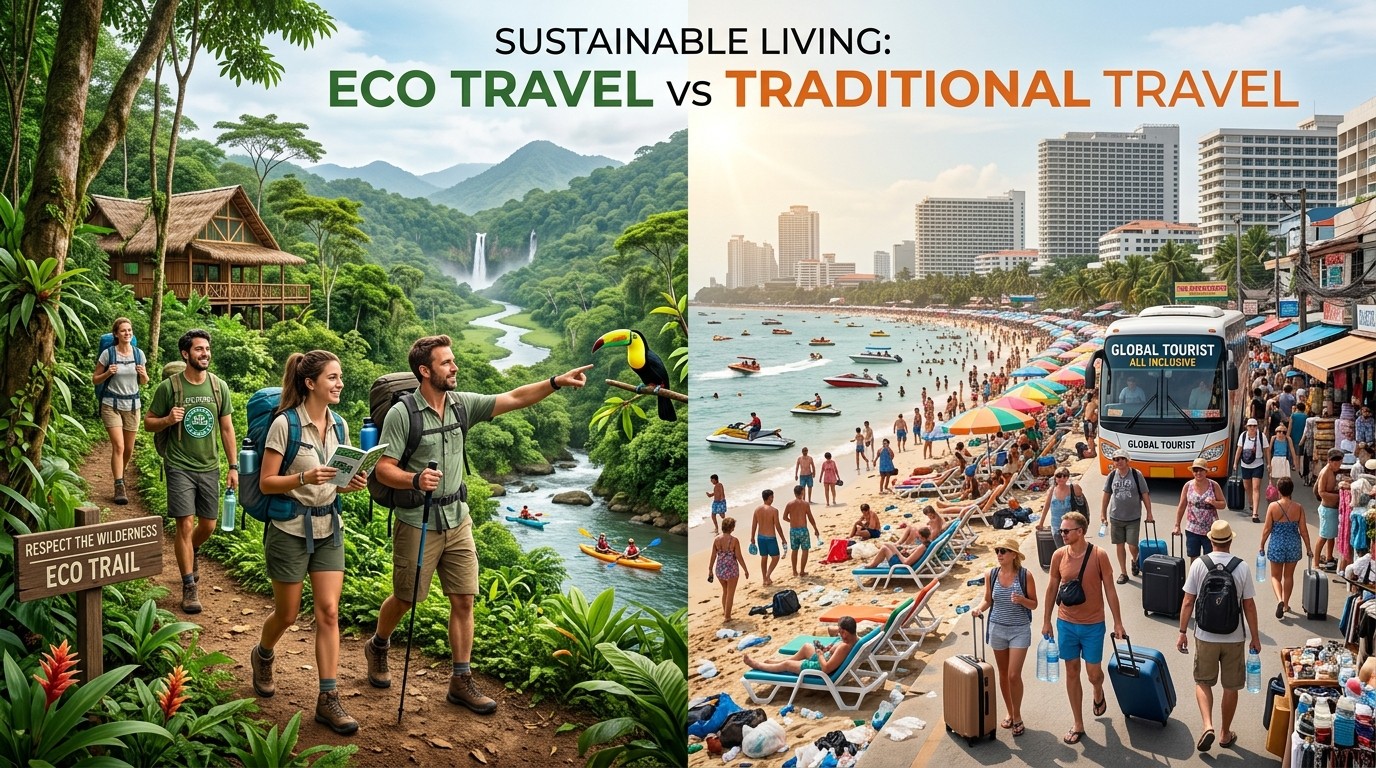
Travel choices shape both personal experience and environmental impact, so a mindful comparison can help travelers plan trips that feel richer, calmer, and more sustainable.
Eco Travel vs Traditional Travel begins with a simple idea: every itinerary makes tradeoffs. A route that saves time may create more movement, while a route that reduces movement may invite a different kind of richness. The point is to understand the cost of the choice, not just the price.
Eco Travel vs Traditional Travel also helps travelers see that sustainability is not an all-or-nothing label. A journey can be more responsible in one area and less responsible in another. What matters is whether the overall shape of the trip is thoughtful, balanced, and easy to sustain.
Eco Travel vs Traditional Travel becomes useful when you want to compare habits instead of slogans. Many people care about comfort, discovery, and value, but those priorities can be met in different ways. The comparison gives those priorities a clearer frame.
Eco Travel vs Traditional Travel is therefore less about moral superiority and more about design. If a traveler understands how transport, lodging, food, and pacing affect the experience, the next trip becomes easier to plan and easier to enjoy.
Transport and movement
Transport is where Eco Travel vs Traditional Travel becomes easiest to see. Traditional trips often rely on more flights, more rental driving, and more transfers, which can speed up the schedule but increase the amount of motion required to reach each highlight.
When the route uses trains, buses, walking, or cycling, Eco Travel vs Traditional Travel points toward a different kind of value. The trip may cover fewer places, yet the journey can feel calmer and the impact of constant movement can be lower.
Movement also affects the traveler emotionally. Eco Travel vs Traditional Travel shows that a packed schedule can create a sense of accomplishment while still leaving you tired, whereas a slower route can feel less dramatic but more present and memorable.
Choosing fewer legs is not always practical, but Eco Travel vs Traditional Travel suggests that travelers should at least ask whether each move is necessary. That question alone can remove waste from the plan and leave more room for experience.
Accommodation and energy
Where you stay matters because lodging affects water, energy, and local spending. Eco Travel vs Traditional Travel encourages travelers to look beyond price and location and notice whether the property uses resources carefully and supports the community around it.
Traditional travel often treats accommodation as a base for sleeping between activities. Eco Travel vs Traditional Travel asks for a little more attention, because a stay can either be a passive stop or a meaningful part of the overall experience.
A guesthouse, small hotel, or locally owned stay can still be comfortable while aligning with Eco Travel vs Traditional Travel. The difference is usually intentionality: what gets reused, what gets minimized, and how the property fits the place.
That intentionality also improves the trip. Eco Travel vs Traditional Travel helps travelers see that comfort does not require waste, and a cleaner stay often creates a calmer mood once the day’s movement is over.
Food and local economy

Food choices are central because every meal either supports local systems or bypasses them. Eco Travel vs Traditional Travel highlights the value of seasonal ingredients, regional dishes, and small businesses that keep more of the travel spend in the destination.
Traditional travel can lean on familiar chains or convenience meals because they are easy. Eco Travel vs Traditional Travel suggests a different reward: the chance to learn about a place through what grows there, what is cooked there, and how people eat there.
A local meal can change the entire tone of the day. Eco Travel vs Traditional Travel reminds us that food is not only fuel but also a cultural signal, giving travelers a direct connection to land and community.
When travelers choose more local food, Eco Travel vs Traditional Travel can reduce the pressure of imported supply chains and increase the value of the trip in a way that feels both practical and memorable.
Pace and attention
Pace is one of the biggest psychological differences in Eco Travel vs Traditional Travel. Traditional travel often encourages a full schedule, more stops, and a sense that every day should be maximized for volume rather than depth.
Eco-minded travel usually slows that rhythm. Eco Travel vs Traditional Travel shows that a slower pace can reduce fatigue, increase attention, and make the journey feel more spacious. The traveler notices more because the mind is not constantly switching tasks.
That attention changes memory. Eco Travel vs Traditional Travel often produces stronger recollections because the traveler has time to absorb the place instead of simply moving through it. A quiet walk or a long meal can become the most meaningful part of the day.
Slowing down also creates room for spontaneity. Eco Travel vs Traditional Travel can make it easier to stop at a viewpoint, follow a small detour, or stay longer in a place that feels worth lingering over.
Costs and value
Many travelers assume greener habits automatically cost more, but Eco Travel vs Traditional Travel shows that the picture is more nuanced. Repeated transfers, constant transport, and short stays can add cost as well as waste.
Longer stays and fewer moves can make a trip more economical in surprising ways. Eco Travel vs Traditional Travel encourages travelers to think about the value of time, energy, and stress, not just the headline price of a hotel or ticket.
Value is also emotional. Eco Travel vs Traditional Travel highlights that a trip may be worth more when it feels calmer and more coherent, even if it is not the cheapest option available.
When the budget is used intentionally, Eco Travel vs Traditional Travel helps travelers spend where the experience improves and cut back where the expense only adds clutter.
Environmental pressure
The environmental side of Eco Travel vs Traditional Travel is not abstract. Transport emissions, overuse of popular sites, and high-consumption habits all affect the places travelers say they love. The footprint is often invisible until the landscape becomes crowded or strained.
A more measured itinerary can reduce that pressure. Eco Travel vs Traditional Travel suggests that even one traveler can make a small difference by shortening unnecessary routes, reducing waste, and choosing more respectful patterns of movement.
Natural areas often feel most fragile when many people move through them quickly. Eco Travel vs Traditional Travel encourages a gentler relationship with those spaces so the enjoyment does not come at the cost of long-term damage.
The goal is not to eliminate travel. Eco Travel vs Traditional Travel simply asks whether the trip can be planned in a way that leaves the place feeling a little less burdened when you leave than when you arrived.
Why speed still matters
Eco Travel vs Traditional Travel is not a call to reject convenience entirely. Some trips need speed because of work, family, or distance. Traditional travel can be the right choice when time is scarce or logistics are difficult.
There are real moments when fast movement is appropriate. Eco Travel vs Traditional Travel helps travelers avoid dogma by acknowledging that convenience has a place, especially when the purpose of the trip demands it.
The difference is awareness. Eco Travel vs Traditional Travel asks you to choose speed because it serves the trip, not because it is the default habit. That small shift can improve both the itinerary and the mindset.
Knowing when to move quickly and when to slow down is part of sustainable living. Eco Travel vs Traditional Travel makes that judgment easier because it gives you a way to compare outcomes instead of just routines.
How to shift habits
Small changes are often enough to begin. Eco Travel vs Traditional Travel can start with one better transport choice, one longer stay, or one more local meal. Those are modest adjustments, but they add up across a trip.
You do not need to redesign your whole life at once. Eco Travel vs Traditional Travel works best when it turns awareness into one or two meaningful actions that feel easy enough to repeat.
As those actions repeat, the planning process changes. Eco Travel vs Traditional Travel gradually makes it more natural to ask whether a short flight, a car trip, or a rushed schedule is actually necessary.
That sort of self-check is powerful because it gives travelers more control. Eco Travel vs Traditional Travel turns sustainable living into a practical habit instead of a distant ideal.
Destination inspiration
Some travelers search for Solo Travel Spain and Solo Travel Portugal because they want examples of trips that already fit a slower or more intentional style. Those searches reflect a desire to match values with a destination.
Others look at Eco Friendly Travel Destinations because they want places where lower-impact choices are easier to make. Eco Travel vs Traditional Travel helps organize that search by separating destinations that merely talk green from those that support greener behavior.
Lists like Top 10 Best Eco Friendly Travel Destinations can be useful starting points, but they work best when paired with the question of how the traveler wants to move, eat, and stay once they arrive.
Eco Travel vs Traditional Travel becomes more practical when inspiration turns into an actual route. That is when values stop being abstract and start shaping real decisions.
Travel mindset
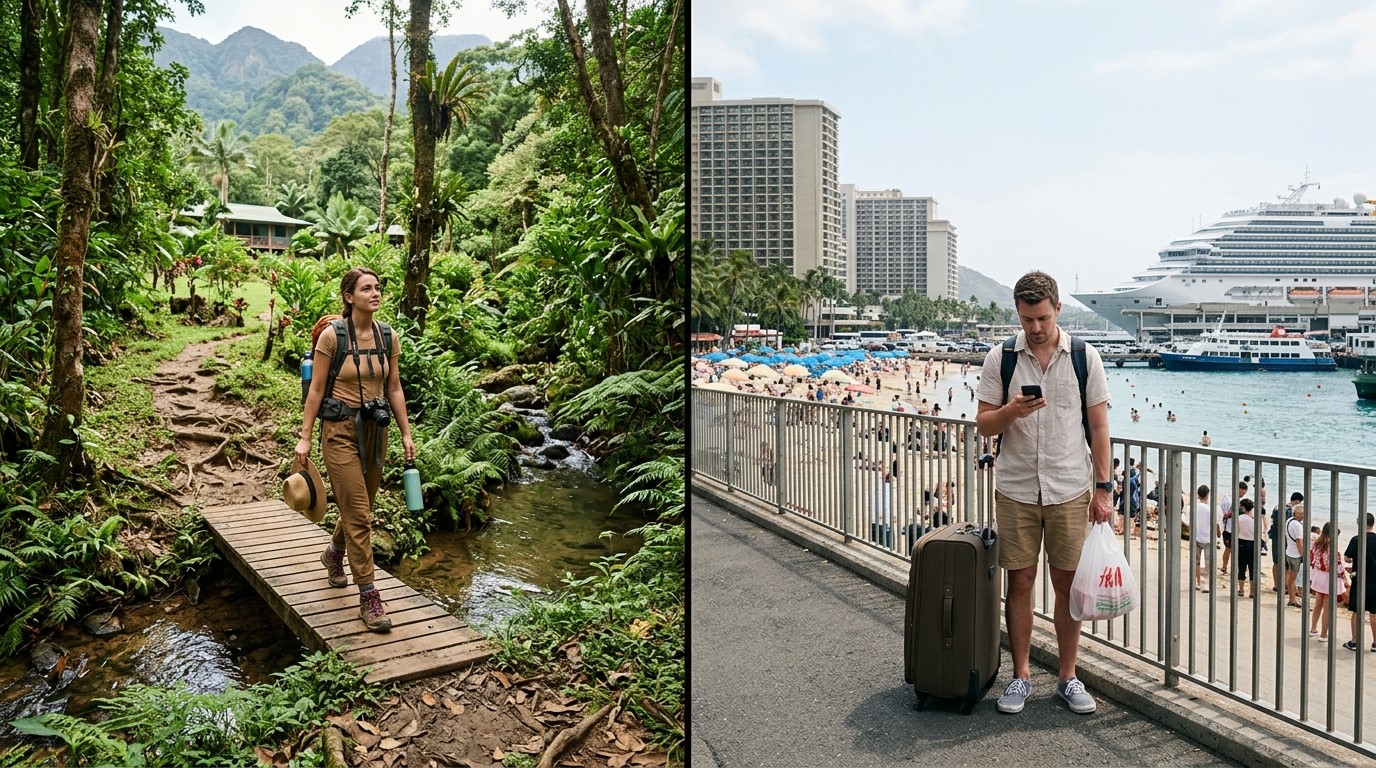
A deeper benefit of Eco Travel vs Traditional Travel is that it connects the trip to a larger philosophy of living. The same habits that reduce waste in travel can also reduce waste in daily life: less rushing, less clutter, and more deliberate choice.
That connection matters because travel often amplifies personality. Eco Travel vs Traditional Travel can reveal whether you are drawn to volume or to depth, to speed or to presence. Knowing that about yourself can improve future trips.
Once the mindset is clear, planning becomes easier. Eco Travel vs Traditional Travel helps you notice which parts of the itinerary are essential and which parts are just inherited habits that no longer serve the experience.
The result is travel that feels more coherent. Eco Travel vs Traditional Travel is useful because it makes the journey line up more closely with the kind of life the traveler wants to lead.
Purpose-driven comparison
Comparisons become clearer when you think about the purpose of the trip. Eco Travel vs Traditional Travel is helpful because a nature-focused break, a city break, a family trip, and a business journey may each justify a different balance of speed and responsibility.
That is why judgment matters more than rules. Eco Travel vs Traditional Travel does not say every traveler must choose the same path. It says the path should be chosen consciously, with an honest look at the consequences and the benefits.
If a route crosses multiple countries, Eco Travel vs Traditional Travel becomes even more relevant because each leg adds movement, cost, and complexity. In that situation, simplifying the route can improve both the experience and the footprint.
Even small itinerary changes can matter. Eco Travel vs Traditional Travel can influence whether you stay two nights or five, whether you rent a car or use transit, and whether you book a direct route or accept a longer journey.
Fewer transitions, better thinking
Travelers often discover that fewer transitions produce less decision fatigue. Eco Travel vs Traditional Travel supports that discovery by showing how a calmer plan can create more space for enjoyment and less pressure to perform the trip.
That calmness can be valuable for reflection. Eco Travel vs Traditional Travel turns travel into a more thoughtful act, where the destination is important but the way you move through it matters just as much.
In many cases, the most sustainable choice is simply the one that fits the trip best without excess. Eco Travel vs Traditional Travel helps travelers find that middle path between indulgence and discipline.
The big lesson is that sustainable living is not only about products or household habits. Eco Travel vs Traditional Travel shows that travel decisions are part of the same larger pattern of mindful consumption and careful use of resources.
How to apply the idea in real life
A practical first step is to choose one trip element to improve instead of trying to fix everything at once. You might keep the same destination but take fewer transfers, or keep the same pace but replace one high-impact leg with a lower-impact option. That is often enough to change the feel of the trip without making planning overwhelming.
Another useful move is to ask what you actually remember from past trips. People often remember a meal, a walk, a view, or a conversation far longer than they remember the number of stops they completed. When planning starts to honor memory instead of volume, the itinerary usually becomes more satisfying.
It can also help to separate habits from preferences. Some choices feel natural only because they are familiar, not because they are the best fit. When you notice that distinction, you can design a trip that reflects real priorities rather than old defaults.
What responsible travel looks like on the ground
Responsible travel is often quiet. It means staying on paths, respecting local rules, carrying waste out with you, and choosing businesses that treat place and people with care. None of those actions requires perfection, but all of them can reduce pressure in a way that compounds across many visitors.
The benefit is mutual. Destinations stay healthier when visitors act carefully, and travelers often enjoy the place more because it feels less crowded, less rushed, and more genuine. That is one reason sustainable choices often improve the trip instead of limiting it.
Why the comparison keeps growing
The question matters more now because people are starting to see travel as part of their lifestyle, not just a temporary escape. When the trip reflects the same values that guide home life, it feels more coherent and less performative.
That coherence is especially attractive for travelers who care about balance. They want movement without chaos, comfort without excess, and discovery without waste. The comparison between the two styles gives them language for that desire.
How destinations influence behavior
Some places naturally make better habits easier. Transit is clearer, distances are shorter, or local business is more central to the visitor experience. When a destination supports these choices, the traveler does not have to fight the system in order to act responsibly.
That is why place matters so much. A trip can shape behavior by the way it is designed. When the destination rewards slower pacing and local connection, sustainable behavior feels less like sacrifice and more like the obvious way to move through the journey.
The most important takeaway
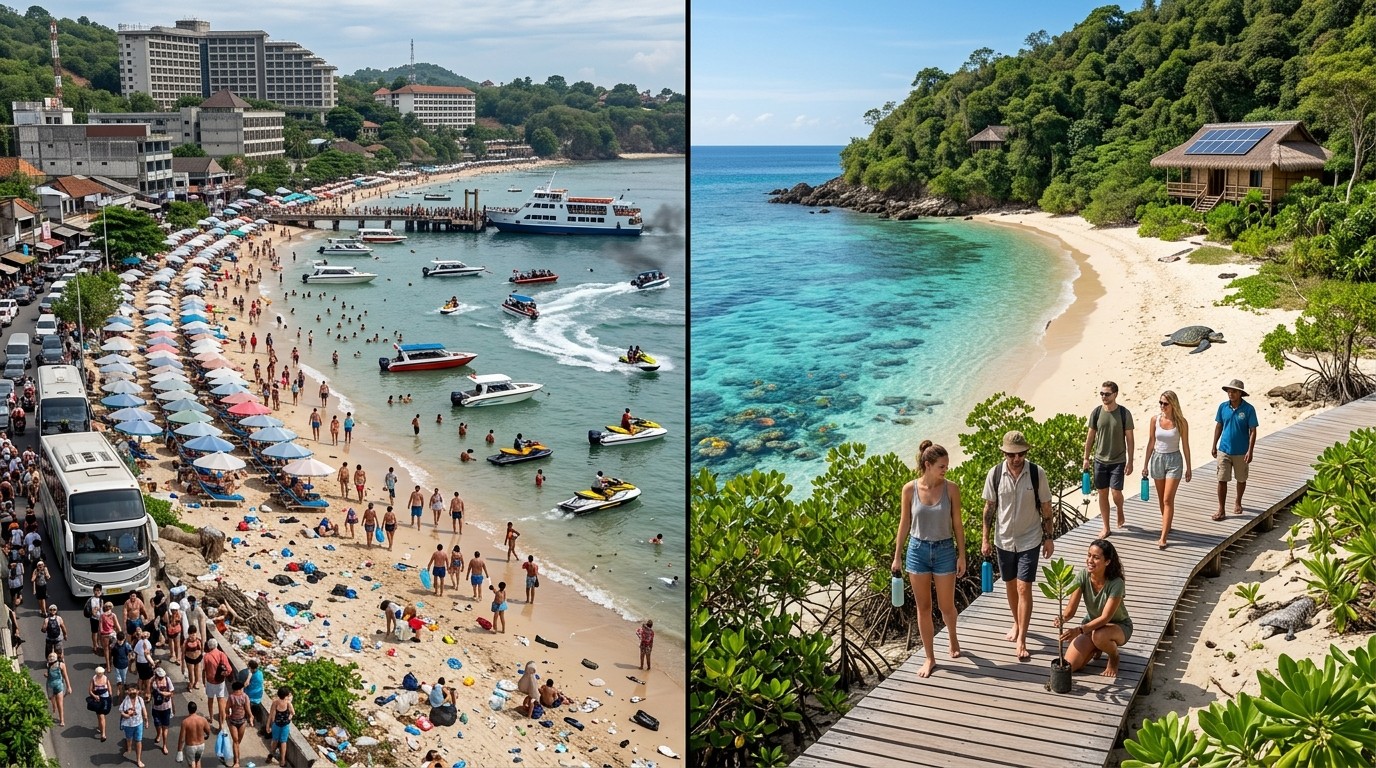
The most useful lesson is that a travel choice can be both enjoyable and thoughtful. You do not need to abandon comfort to act with care, and you do not need to chase a perfect itinerary to reduce waste.
What matters most is intention. When the traveler is willing to look at pace, transport, food, lodging, and destination with a little more honesty, the trip usually becomes better in ways that are visible during the journey and long after it ends.
A final note on travel style
A useful travel plan also considers how you want to feel at the end of the day. Some people enjoy being pleasantly tired after a full schedule, while others prefer to end the day with energy left for dinner, reflection, or a quiet walk. Neither preference is wrong. The important thing is to match the pace to the emotional outcome you actually want. When the structure of the trip supports that outcome, you tend to enjoy the journey more and waste less energy fighting the plan. That is one of the clearest ways careful planning improves both comfort and responsibility.
Another practical angle
It is also helpful to notice how often convenience becomes automatic. Many travelers choose the fastest route without asking whether the time saved is actually worth the extra movement, the higher cost, or the greater pressure on the destination. Once you start asking that question, the whole planning process changes. A short break may still deserve a direct flight, while a longer trip may be better served by a slower route with fewer transfers. The point is not to eliminate convenience, but to use it with more intention so it supports the purpose of the journey instead of controlling it.
Why the conversation helps others too
The comparison can even shape how you talk about travel with other people. When friends or family ask for recommendations, you can move beyond simple destination lists and explain what kind of travel style would fit them best. That kind of guidance is useful because it respects different personalities and different budgets. One person may want fast movement and many cities, while another wants fewer stops and more depth. A sustainable mindset does not erase those differences. It simply gives people better language for making choices that fit their own version of a good trip.
Conclusion
Travel becomes more meaningful when the choices behind it are made with intention. The contrast between faster, more convenience-driven trips and slower, more resource-aware trips is not about perfection or guilt. It is about deciding what kind of experience you want and what kind of impact that experience leaves behind. A thoughtful traveler can still enjoy comfort, discovery, and spontaneity while reducing waste and pressure on the places visited. The best trips often feel balanced rather than extreme. When the route, pace, food, and stay all reflect your values, travel stops being a race and becomes a more honest expression of sustainable living.
Frequently Asked Questions (FAQ)
1. What is the main difference between eco and traditional travel?
Eco travel focuses more on lower-impact choices, while traditional travel usually prioritizes speed, convenience, and a fuller itinerary.
2. Does greener travel always cost more?
No. Fewer transfers, longer stays, and local transport can sometimes lower total trip costs.
3. Can a comfortable trip still be sustainable?
Yes. Comfort and sustainability can work together when the itinerary is designed with intention.
4. Why do people compare these two travel styles?
Because travelers want to balance enjoyment, convenience, cost, and environmental responsibility.
5. How do I start traveling more sustainably?
Begin with one small change, such as taking fewer flights, staying longer in one place, or choosing a local meal.
6. Are sustainable trips only for nature destinations?
No. Cities can also support greener travel through transit, walkability, and local business choices.
7. Is slower travel always better?
Not always, but slower travel often reduces stress and can lower resource use.
8. Do small choices really matter?
Yes. Repeated small choices compound over the course of a trip.
9. How do I choose a better destination?
Look for places that support transit, local spending, and responsible visitor behavior.
10. What is the biggest benefit of this mindset?
It helps you travel in a way that feels more thoughtful, less wasteful, and more aligned with your values.