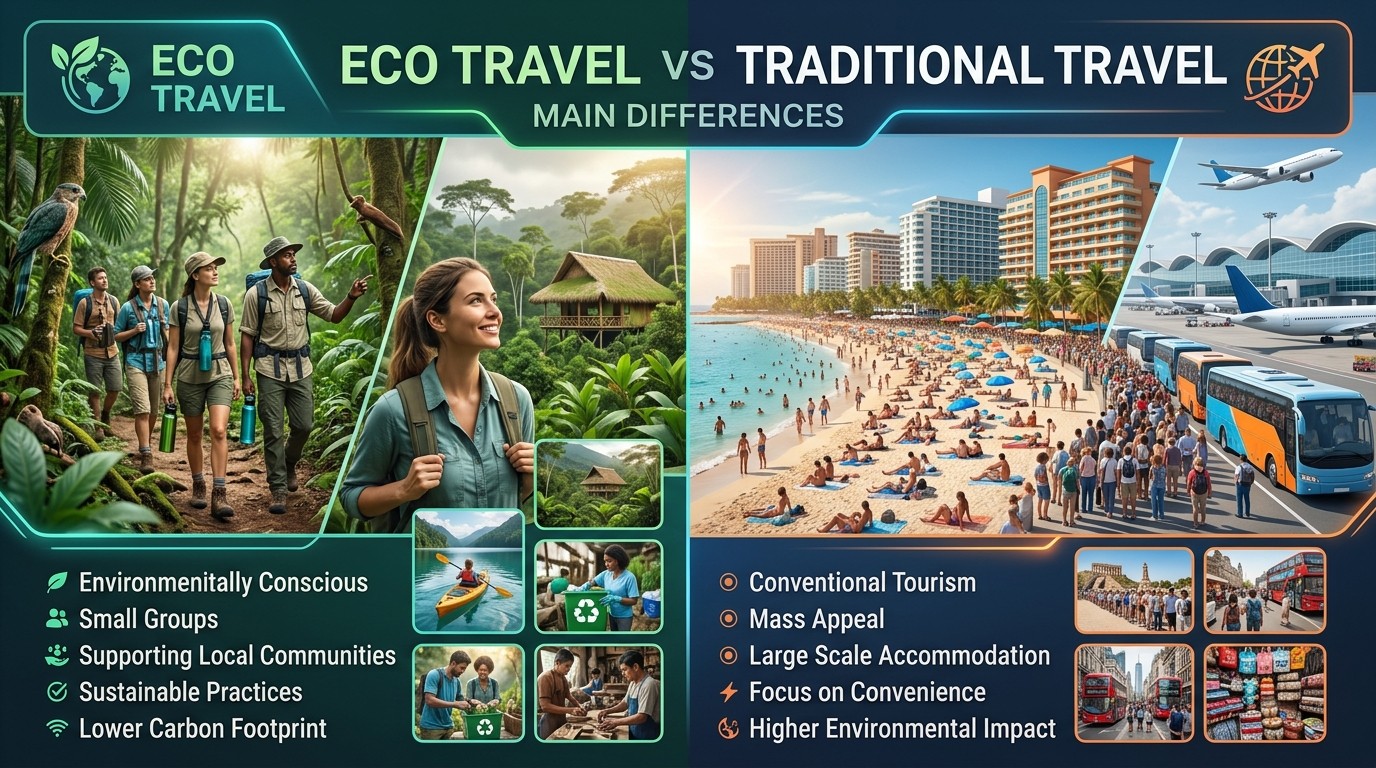
This guide compares impact, comfort, cost, pace, and planning style so travelers can choose trips that fit their values without losing practicality or enjoyment.
Eco Travel vs Traditional Travel is not just a style preference; it is a decision about what kind of footprint you want your trip to leave behind. One style leans toward lower-impact choices, slower movement, and local connection, while the other leans toward convenience, speed, and familiar comfort. That difference affects transport, lodging, food, waste, and even how you remember the journey afterward.
Eco Travel vs Traditional Travel also matters because tourism is not neutral. UN Tourism says sustainable tourism guidelines apply to all forms of tourism, including mass tourism, and UNEP describes sustainable tourism as a way to mainstream sustainability across the tourism value chain. That means the choices travelers make are part of a much bigger system, not just a personal preference.
Eco Travel vs Traditional Travel becomes especially important when travelers are booking faster, flying farther, and moving more often. Tourism transport is a major climate issue, and official sources have repeatedly pointed out that transport-related emissions from tourism are significant. This is why the conversation is shifting from “nice idea” to “practical travel strategy.”
Transportation is where the split becomes obvious
Eco Travel vs Traditional Travel shows its biggest difference in how people move. Traditional travel often uses the fastest available option, which can mean more flights, more private rides, and more short hops between places. Eco-minded travel often asks a different question: what is the least wasteful way to reach the same destination without making the trip miserable?
Eco Travel vs Traditional Travel is not about pretending flights do not matter. It is about acknowledging that aviation is a major part of the tourism footprint. IATA’s sustainability materials show that aviation is working toward lower-carbon pathways such as sustainable aviation fuel, while UN Tourism and UNEP keep emphasizing transport as a central emissions concern. The traveler cannot solve aviation alone, but the traveler can make better routing choices.
Eco Travel vs Traditional Travel often comes down to whether you choose a nonstop route, a rail connection, or a string of shorter legs that add up to more energy use and more stress. A traditional itinerary may chase speed at every step, but a more eco-oriented one usually reduces unnecessary movement. Fewer transfers often mean fewer delays, fewer missed bags, and fewer decisions that drain energy.
Eco Travel vs Traditional Travel also changes the pace of the whole trip. A traveler who stays longer in one place usually needs fewer transport bookings and creates less churn. That slower pattern often feels calmer, cheaper to maintain, and more connected to the destination. It is not always possible, but when it is, it can transform the trip.
Eco Travel vs Traditional Travel can even influence how you plan around layovers and side trips. A traditional mindset may treat every extra stop as a bonus, while an eco-minded mindset asks whether the extra movement actually improves the journey. The best route is not the one with the most miles covered; it is the one that makes sense for your goals and your energy.
Eco Travel vs Traditional Travel becomes easier to evaluate once you remember that transport is both a convenience choice and a values choice. If speed matters most, traditional travel often wins. If lower impact and better flow matter more, eco choices start to look better almost immediately. Neither approach is always perfect, but the difference is real.
Lodging changes more than people expect

Eco Travel vs Traditional Travel is not only about getting there. It is also about where you sleep. Traditional lodging often emphasizes scale, standardized service, and convenience. Eco-oriented lodging often emphasizes energy efficiency, water savings, waste reduction, and stronger local ties. The room may look similar at first glance, but the operating logic behind it can be very different.
Eco Travel vs Traditional Travel also affects the kind of relationship you have with the place you are visiting. Smaller or locally rooted properties often encourage guests to learn more about the neighborhood, the food, and the transport options around them. Larger properties can be easier in some situations, but they may also feel detached from the destination itself.
Eco Travel vs Traditional Travel matters here because accommodation is a major part of the tourism value chain. UNEP has emphasized sustainable consumption and production patterns in tourism, and UN Tourism continues to frame sustainability as part of responsible tourism development. That means where you stay is not just a comfort decision; it is part of the footprint of the trip.
Eco Travel vs Traditional Travel can also shape how much waste you create during a stay. A hotel with better towel policies, refill stations, and lower single-use packaging can make sustainable behavior easier without much effort. A more traditional setup may be convenient, but it can encourage automatic waste through disposable items, frequent laundering, and excess amenities that are not actually used.
Eco Travel vs Traditional Travel does not require choosing the most rustic option available. It simply asks whether the property helps you travel in a lighter, smarter way. A comfortable room can still be efficient. A well-managed property can still feel relaxing. The goal is not sacrifice for its own sake; it is to make the stay match the trip’s values.
Eco Travel vs Traditional Travel also affects how often you move hotels. Traditional travel sometimes encourages short stays and constant repositioning. Eco travel often benefits from staying longer, especially if the destination is walkable or transit-friendly. Fewer hotel changes usually mean less packing, less transport, and less stress.
Food and spending patterns reveal the deeper difference
Eco Travel vs Traditional Travel becomes very visible when money changes hands. Traditional travel often spends heavily on convenience: chain dining, packaged experiences, last-minute purchases, and expensive transport between each activity. Eco-oriented travel tends to spend more locally, with markets, neighborhood cafés, family-run restaurants, and small businesses that keep value in the destination.
Eco Travel vs Traditional Travel is not about eating less or enjoying less. It is about paying attention to where the money goes. Spending locally often creates more meaningful contact with the place and can support the people who actually live there. That can make the trip feel richer without necessarily making it more expensive.
Eco Travel vs Traditional Travel also affects waste. If you buy more packaged snacks, more bottled drinks, more disposable convenience items, and more unnecessary souvenirs, the trip becomes more resource-heavy. A more intentional plan usually reduces those purchases naturally because you are not living out of constant urgency.
Eco Travel vs Traditional Travel may also influence how you think about experiences. A traditional trip might try to maximize the number of attractions. An eco-minded trip may prioritize slower meals, local guides, small museums, neighborhood walks, and experiences that create more connection and less churn. That shift often makes the journey more memorable.
Eco Travel vs Traditional Travel should not be judged only by whether the traveler spends money. It should be judged by what kind of value the spending creates. If the trip helps local businesses, reduces waste, and still feels enjoyable, then the balance is working in your favor. Sustainable travel is often less about spending less and more about spending smarter.
Eco Travel vs Traditional Travel also becomes a planning question. Do you want to keep moving between expensive convenience points, or do you want to build a more rooted rhythm? For many travelers, the second option leads to better stories, calmer days, and fewer regrets.
Packing habits quietly shape the whole trip
Eco Travel vs Traditional Travel starts before departure because what you pack affects what you buy later. If you pack well, you are less likely to buy disposable replacements, emergency chargers, extra toiletries, or unnecessary clothing at your destination. Light, intentional packing is usually more flexible and creates less waste.
Eco Travel vs Traditional Travel becomes easier when your documents, confirmations, and essential papers are organized before you leave. A Travel Documents Organizer may sound like a tiny detail, but it prevents panicked reprinting, forgotten reservations, and rushed purchases at the airport. Small systems often create the biggest travel relief.
Eco Travel vs Traditional Travel also benefits from reusables. A bottle, a tote, a simple utensil kit, and a compact toiletry setup can eliminate a surprising amount of single-use waste. This is not about turning travel into an exercise in self-denial. It is about avoiding the repeated friction of buying and discarding the same things over and over.
Eco Travel vs Traditional Travel is especially relevant when you are Packing for Long Haul Flights because longer journeys often invite overpacking and more last-minute purchases. A long trip needs a calm, organized bag more than a giant one. The more deliberate your system, the easier it is to keep the trip efficient from airport to hotel to transit.
Eco Travel vs Traditional Travel also changes how many backup items you bring. Traditional packers often prepare for every possible inconvenience by bringing multiple versions of the same thing. Eco-minded travelers usually try to make each item serve a real purpose. That lighter approach often reduces clutter and makes airport movement easier.
Eco Travel vs Traditional Travel works best when you think in layers: essentials, comfort items, and only then extras. That order keeps your bag from becoming a junk drawer. It also helps you remember that a lighter bag often means less stress, less waste, and less chance of leaving things behind.
Destination research matters more than marketing

Eco Travel vs Traditional Travel should be considered before the destination is booked, not after. Some places naturally support lower-impact behavior because they are walkable, rail-connected, or built around compact neighborhoods. Other places force more car use, longer transfers, and more waste-intensive habits no matter how careful the traveler is.
Eco Travel vs Traditional Travel becomes more practical when you choose places that make good behavior easier. Best Eco Friendly Travel Destinations are often the ones where public transport works, local food is accessible, and the trip does not require constant movement by private vehicle. The destination design helps the traveler do better without feeling punished for it.
Eco Travel vs Traditional Travel can also be misunderstood when people rely on glossy marketing. A resort may advertise green values while still encouraging waste-heavy habits. A small town may not market itself as sustainable but may naturally support low-impact travel through transit, walkability, and local ownership. That is why traveler behavior and destination structure should be evaluated together.
Eco Travel vs Traditional Travel research can be helped by comparison lists, but the list itself should not be the final answer. Top 10 Best Eco Friendly Travel Destinations List can be useful for inspiration, yet the real question is whether the destination fits your route, your budget, and your preferred pace. A sustainable destination that does not suit your style will still feel frustrating.
Eco Travel vs Traditional Travel becomes easier when you ask three questions: Can I move around without overusing transport? Can I spend money locally? Can I stay longer without creating unnecessary churn? If the answer is yes, the trip is probably a good fit.
Eco Travel vs Traditional Travel is also about matching expectations to reality. Some places are better for slow travel, some for train travel, and some for short guided stays. The best choice is not always the greenest on paper. It is the one you can actually follow through on well.
Eco Travel vs Traditional Travel can even guide whether you choose a single destination or a multi-stop itinerary. A multi-stop trip can still be thoughtful, but every extra transfer should earn its place. If the stop does not add real value, it may just add noise.
A simple comparison table
| Travel Decision | Eco-Oriented Choice | Traditional Choice |
|---|---|---|
| Transport | Fewer hops, lower-impact options where possible | Faster, more frequent movement |
| Lodging | Smaller, efficient, locally rooted stays | Larger, convenience-first properties |
| Spending | Local shops, markets, and neighborhood businesses | Chains, packaged conveniences, and high-turnover purchases |
| Packing | Reusables and light, intentional gear | Extra backups and disposable items |
| Trip rhythm | Longer stays, slower days, fewer transfers | Faster schedule, more movement, more stops |
Eco Travel vs Traditional Travel is often decided through these small choices rather than one dramatic decision. If several rows lean one way, the whole trip tends to lean that way too.
Comfort and responsibility are not enemies
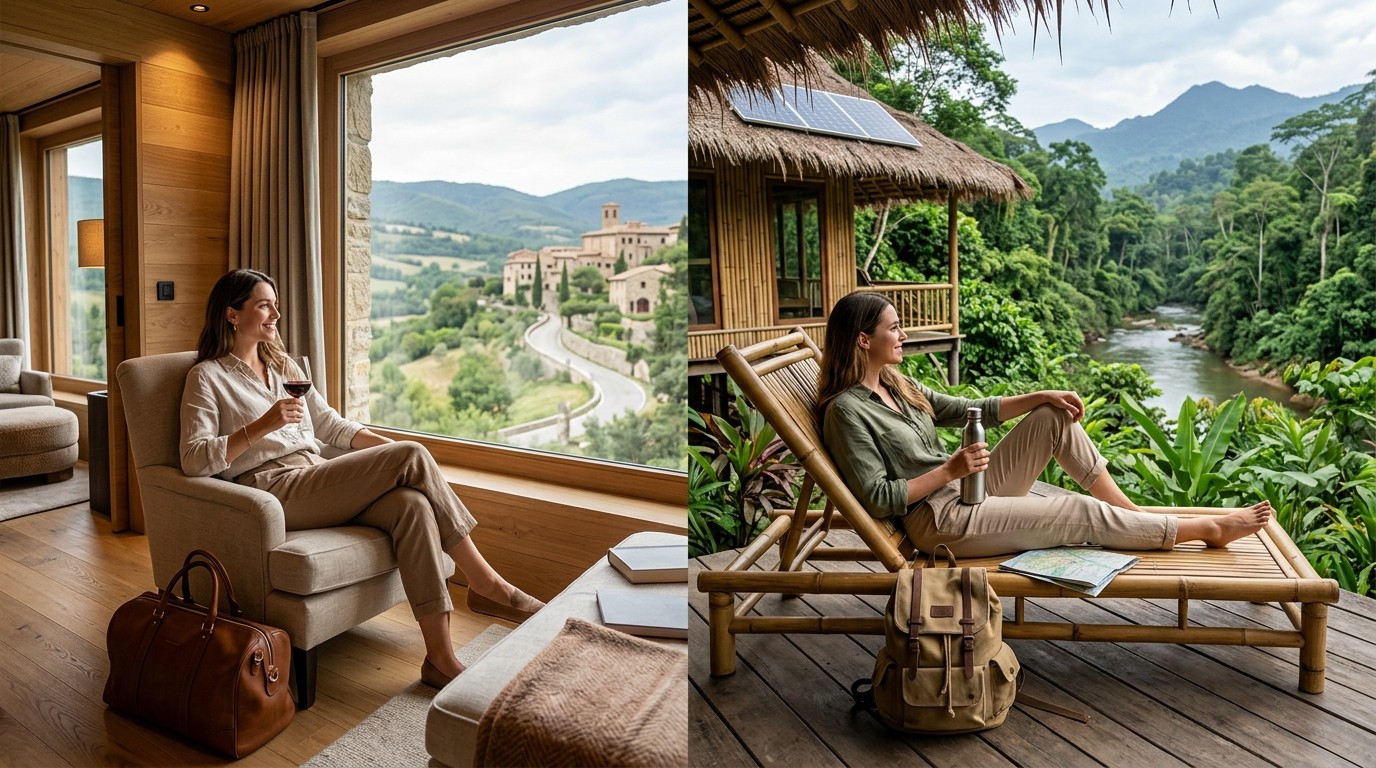
Eco Travel vs Traditional Travel is often framed as if one side is comfortable and the other is virtuous. That is too simple. A thoughtful eco-oriented trip can still be comfortable, and a traditional trip can still be responsible in some areas. The most useful mindset is balance, not purity.
Eco Travel vs Traditional Travel becomes more realistic when you ask where convenience truly matters. Sometimes speed is the right choice because of family needs, accessibility, safety, or limited vacation time. Sometimes convenience is just habit. Good travel planning separates those two cases and gives each one the right amount of weight.
Eco Travel vs Traditional Travel also affects how travelers feel about their own decisions. People usually enjoy trips more when they feel aligned with their values. If a lighter, more local trip makes you feel calmer and more present, that matters as much as any climate metric. If a structured, convenience-first trip prevents exhaustion, that matters too.
Eco Travel vs Traditional Travel should be treated like a spectrum. Very few trips are perfectly one thing. Most are mixed. The goal is to move the mix in a better direction without making the trip miserable or unrealistic.
Eco Travel vs Traditional Travel becomes easier when you stop asking for perfection and start asking for improvement. One fewer transfer. One more local meal. One less disposable item. One extra night in the same place. Those small moves often add up to a trip that feels both better and lighter.
Eco Travel vs Traditional Travel is not a test you pass or fail. It is a planning approach that helps you travel with more intention, more awareness, and less waste.
Why the mental side matters
Eco Travel vs Traditional Travel is not only about footprint. It is also about how the trip feels inside your head. Traditional travel can create a constant sense of urgency: more attractions, more movement, more upgrades, more checking. Eco-oriented travel often slows that down, which can lower stress and help travelers notice the actual place they are in.
Eco Travel vs Traditional Travel can also influence memory. Many people remember slower, more connected experiences more vividly than rushed, high-consumption ones. A relaxed train journey, a neighborhood café, or a long walk through a local district often stays in the mind longer than a checklist of quick stops.
Eco Travel vs Traditional Travel may even help reduce post-trip regret. When you know you made a few responsible choices and still enjoyed yourself, the trip tends to feel cleaner emotionally. That does not mean every decision has to be green. It means the overall direction feels better.
Eco Travel vs Traditional Travel works especially well for travelers who like control without constant pressure. A few good habits reduce decision fatigue and leave more mental space for enjoyment. This is one of the reasons sustainable habits often become travel habits once people try them.
Eco Travel vs Traditional Travel also reminds us that travel is not just consumption. It is experience, learning, pacing, and attention. The more those elements come together, the more the trip feels worthwhile.
Eco Travel vs Traditional Travel is therefore a practical and emotional choice at the same time. That is why it matters so much.
Conclusion
Eco Travel vs Traditional Travel is ultimately about the kind of journey you want to create and the kind of impact you want to leave behind. Traditional travel often offers speed and convenience, while eco travel leans toward lower-impact decisions, slower pacing, and stronger local connection. Neither approach is automatically perfect, and most real trips fall somewhere between the two. The smartest travelers do not chase purity. They look for better balance: fewer wasteful habits, better transport choices, smarter packing, and more meaningful spending. When those small decisions line up, the trip usually becomes calmer, more memorable, and more aligned with what matters most.
Frequently Asked Questions (FAQ)
1. What is the biggest difference between eco and traditional travel?
Eco Travel vs Traditional Travel differs most in transport, waste, and how locally connected the trip feels.
2. Does eco travel always cost more?
Not always. Eco Travel vs Traditional Travel can be cheaper when it reduces transfers, unnecessary purchases, and overpacked itineraries.
3. Is flying always the wrong choice?
No. Eco Travel vs Traditional Travel is about making better choices where possible, not avoiding every flight in every situation.
4. What is the easiest eco habit to start with?
Eco Travel vs Traditional Travel becomes easier if you start by staying longer in fewer places and carrying reusable items.
5. How do I know if a hotel is actually sustainable?
Eco Travel vs Traditional Travel research should include checking for energy use, waste practices, water policies, and local sourcing instead of relying on marketing alone.
6. Are trains always better than planes?
Eco Travel vs Traditional Travel often favors trains for shorter routes, but the best option depends on distance, timing, and your overall trip plan.
7. What is the role of local spending?
Eco Travel vs Traditional Travel usually puts more value on local spending because it keeps money in the destination and supports smaller businesses.
8. How do I pack more responsibly?
Eco Travel vs Traditional Travel packing is easier when you bring only what you will use and rely on reusable items instead of disposables.
9. Can a family trip still be eco-friendly?
Yes. Eco Travel vs Traditional Travel can work for families when you choose practical transport, fewer transfers, and a more organized packing system.
10. What is the simplest way to think about this topic?
Eco Travel vs Traditional Travel is about reducing waste where you can while keeping the trip enjoyable, realistic, and comfortable.